

The short answer
Charging speed should follow dwell time and business goals
A Chicago apartment garage where cars remain overnight has a different charging profile than a retail site built around short visits or a fleet yard with scheduled departures. Begin with the customer journey and operating schedule, then determine power and equipment.
| Decision | Level 2 charging | DC fast charging |
|---|---|---|
| Typical dwell pattern | Vehicles parked for several hours or overnight | Shorter stops or tightly scheduled fleet turns |
| Common settings | Multifamily, workplace, hotel, community and destination parking | Fleet, corridor, travel and quick-turn commercial sites |
| Electrical demand | Lower per port; often suited to managed charging across several spaces | Much higher; utility review and service work may be substantial |
| Planning emphasis | Port sharing, billing, access control and phased growth | Traffic flow, utility capacity, uptime, queuing and operating cost |
Some properties benefit from a mix. The point is not to buy the fastest equipment; it is to provide enough useful energy during the time a vehicle is naturally parked.
A useful site assessment answers more than “Is there power?”
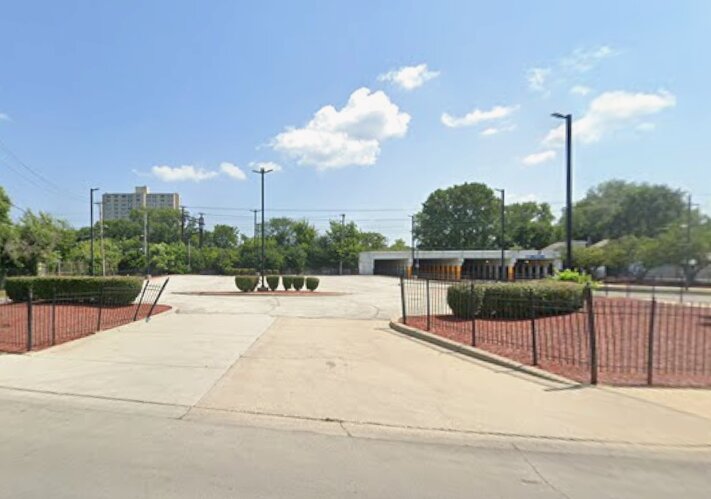
The assessment should connect electrical conditions to parking, construction, accessibility, networking, and operations. At minimum, document:
- Existing electrical service, panels, breakers, load history, and expansion options
- Distance and route from electrical equipment to proposed charging spaces
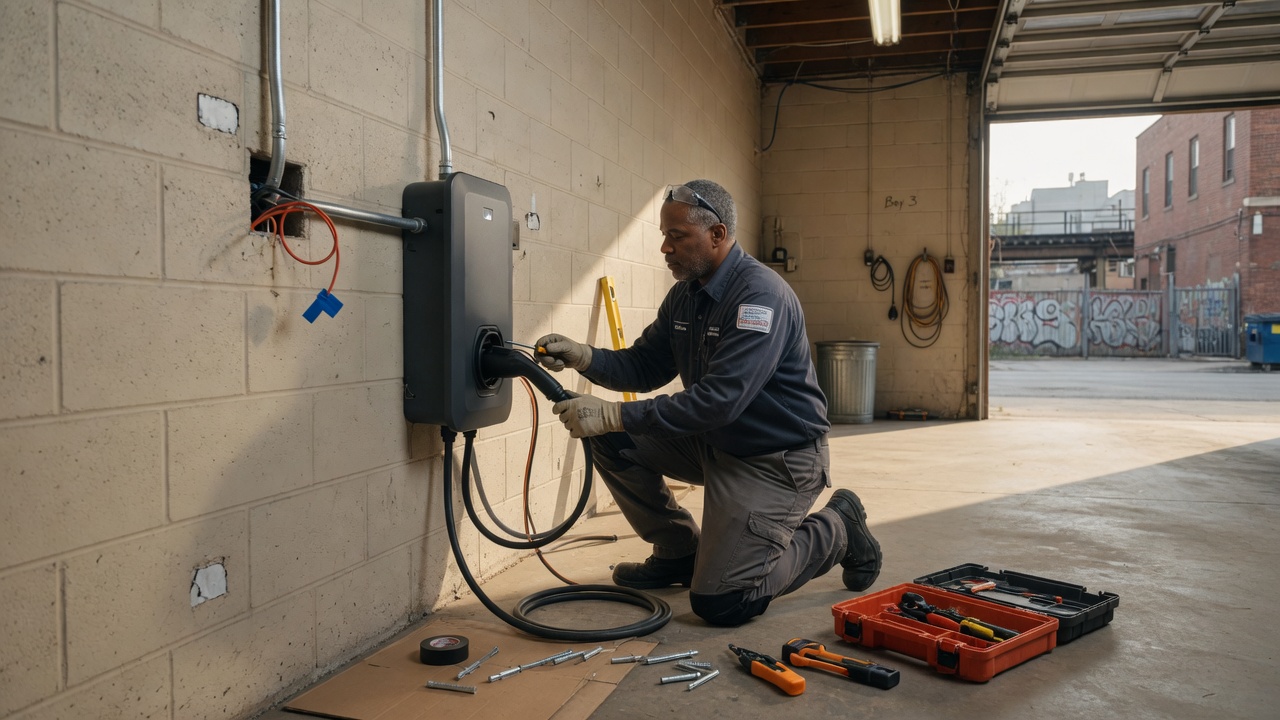
- Trenching, boring, wall penetrations, restoration, drainage, and underground conflicts
- Parking duration, turnover, fleet schedule, public access, and expected utilization
- Accessible routes and operable parts, cable reach, signage, lighting, bollards, and snow storage
- Cellular or wired connectivity, access control, pricing, payment, and reporting needs
- Future phases, spare conduit, reserved panel capacity, and load-management strategy
Common cost surprise
The charger is only one line item. Long conduit runs, pavement restoration, panel work, utility upgrades, and site-specific civil work frequently shape the budget.
A well-managed Chicago installation usually follows seven stages
- Define the use case.
Identify drivers, parking duration, access hours, payment rules, initial ports, and the expansion target.
- Survey the site.
Verify the electrical system and field conditions rather than relying only on photos, plans, or a charger quote.
- Develop the concept and load strategy.
Compare service upgrades with managed charging and phased installation. Preserve options for future ports.
- Coordinate utility, permits, and incentives.
These tracks overlap. Start early, keep assumptions dated, and do not let a funding deadline force an incomplete design.
- Finalize equipment and construction documents.
Confirm connector strategy, mounting, network, accessibility, protection, signage, and responsibilities between vendors.
- Install, inspect, and commission.
Test charging, networking, payment, access control, labeling, emergency contacts, and every port—not only electrical energization.
- Operate and maintain.
Set ownership for alerts, driver support, firmware, inspections, cable damage, snow clearance, reporting, and repair response.
Illinois requires vendors installing EV chargers to comply with Illinois Commerce Commission certification rules. The U.S. Department of Energy’s Illinois summary also notes training, insurance, and utility-notification requirements for certified installers. Confirm the contractor’s current status and the permit requirements for the exact address.
What affects EV charger installation cost in Chicago?
No responsible installer can price every Chicago property from a port count alone. The largest variables usually include:
Power
Available capacity, service voltage, panels, transformers, switchgear, and load management.
Distance
Conduit length, trenching or boring, penetrations, restoration, and underground conditions.
Site design
Accessible layout, protection, signage, drainage, lighting, traffic flow, and winter operations.
Operations
Network subscriptions, payment processing, communications, warranty, support, and maintenance.
A phased plan can control upfront cost, but only if the first phase includes the pathways and capacity strategy needed for later expansion.
Questions to ask before choosing an installation partner
- Is your Illinois EV charging-station installer certification current, and where can I verify it?
- Who owns design, permits, utility coordination, inspections, commissioning, and closeout?
- Which assumptions are based on a field survey, and which still need verification?
- What is included in make-ready work, charger hardware, networking, and recurring costs?
- How does the design support additional ports without repeating finished work?
- Who responds when a charger is online but cannot deliver a successful session?
Plan the whole system
Bring the site conditions into focus before selecting hardware.
Welsh Global Energy supports charging projects across Chicago and the broader Chicagoland area, from initial site assessment through utility coordination, installation, and commissioning.
Official references
- U.S. Department of Energy AFDC — Illinois EV charger installation requirements
- Illinois Commerce Commission — EV charging station installer certification
- Illinois EPA — current charging funding and program information
This guide is general planning information. The authority having jurisdiction, serving utility, licensed design professionals, and certified installer should confirm requirements for a specific property.