
Charging support
Frequently Asked Questions
How do we get started?
Request a site walk. We’ll verify electrical capacity, parking layout, conduit runs, and connectivity, then return a phased design, a line-item budget, and an incentive roadmap.
We’re a church/community center—can we share chargers with the public?
Absolutely. We can configure “open to public” hours, set different prices for members/guests, and list your site in trusted charging apps to drive utilization.
Do you help with community/curbside projects?
We can support community charging site selection and early planning. Curbside projects add public-right-of-way, utility, accessibility, and municipal coordination that must be evaluated for the specific location.
What will this cost—and what’s the ROI?
It depends on power, trenching, panel capacity, networking, and site complexity. Active utility or state programs can materially change the budget, but availability and eligibility are never guaranteed. We separate confirmed program assumptions from the base project cost.
What about ongoing maintenance?
We offer maintenance and uptime SLAs, periodic inspections, firmware updates, and replacement plans for cables, contactors, and screens.
Do you provide networking, payments, and monitoring?
Yes. We work with OCPP-compliant platforms for user access (RFID/app), pricing, and remote diagnostics. You’ll have dashboards for usage and revenue.
How do you ensure accessibility and safety?
We design for ADA access, lighting, bollards, signage, cable management, and camera coverage as appropriate. We also plan snow/ice management for winter reliability.
What’s the difference between Level 2 and DC fast charging?
Level 2 adds ~20–30+ miles per hour (varies by vehicle/charger). DC fast adds much more quickly but needs higher power and different siting (and typically higher costs). We’ll propose the right mix for your use case.
What power do I need? Will I need a service upgrade?
Not always. Load-management and smart panels can let multiple ports share capacity. We model your loads and only recommend upgrades if they’re truly required.
How long does installation take?
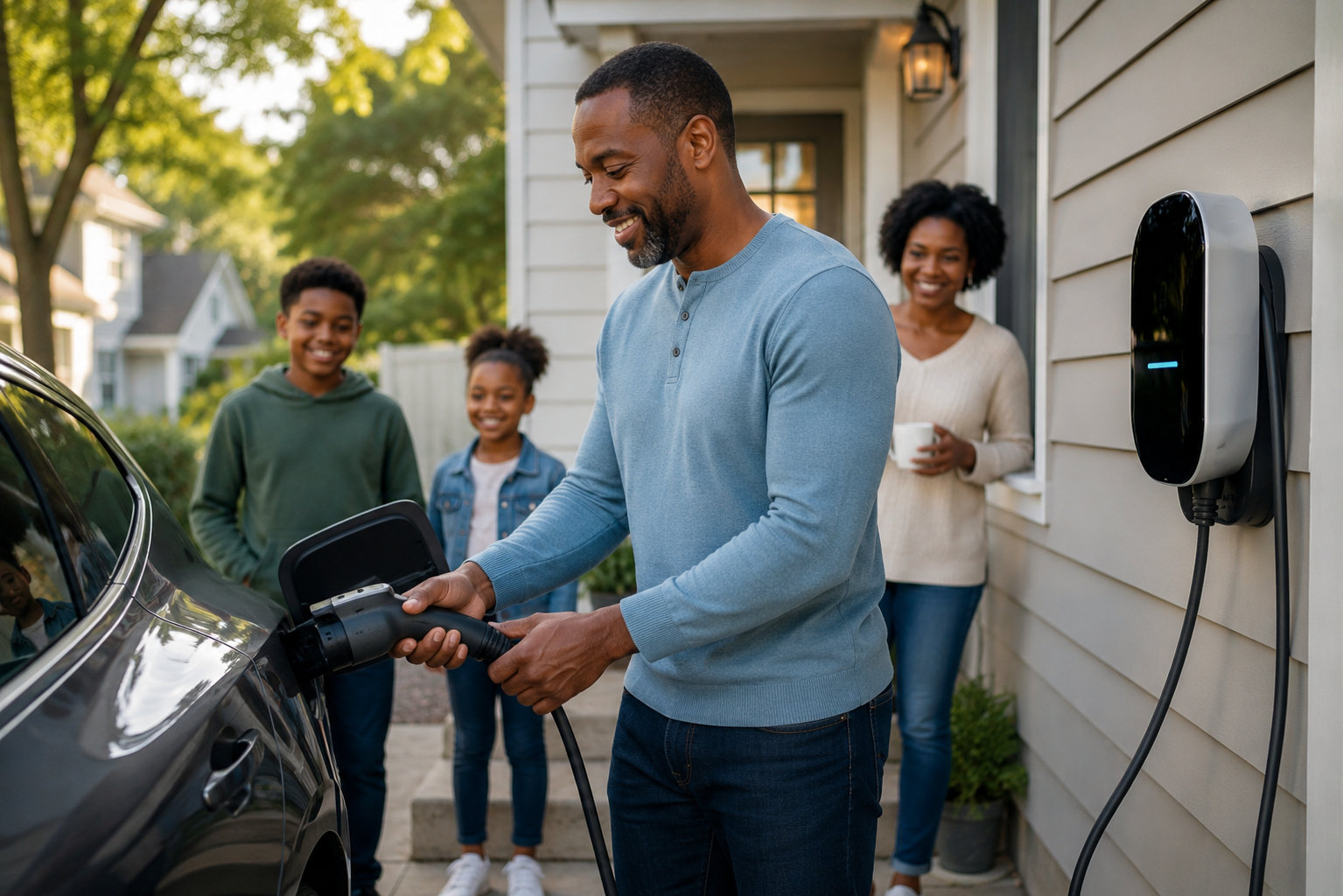
Small residential Level-2: typically days once permits and hardware are ready. Commercial/multifamily projects range from a few weeks to several months depending on permitting, utility work, and construction scope.
My building is new or being renovated. Do codes require EV-ready spaces?
Illinois and local EV-capable requirements vary by building type, affordable-housing status, permit date, parking, and scope of work. New residential construction and some large multifamily renovations can trigger specific requirements. We verify the rules for the address and project scope with the design team and code officials rather than applying one percentage to every property.
What incentives are available right now?
Programs change frequently. As last verified August 26, 2026, the Illinois EPA is not accepting additional CEJA EV Charging Round 3 applications because all available funding has been requested. Its separate vehicle-purchase rebate cycle runs August 1–December 31, 2026 and is for eligible individuals—not business charging construction. ComEd program availability and terms should be checked live before they are included in a project budget.
Do you handle permits and utility coordination?
Yes. We manage site assessment, design, permitting, utility coordination, inspections, and commissioning—end-to-end.
What charging levels do you offer?
Level 2 (208–240V) for homes, multifamily, workplaces, and destinations; and DC fast charging for commercial, fleet, and corridor sites. We’ll size power, number of ports, and networking to your real-world usage.
Where does WGE install?
We serve Chicago and the broader Chicagoland area, including Cook County and neighboring counties.